

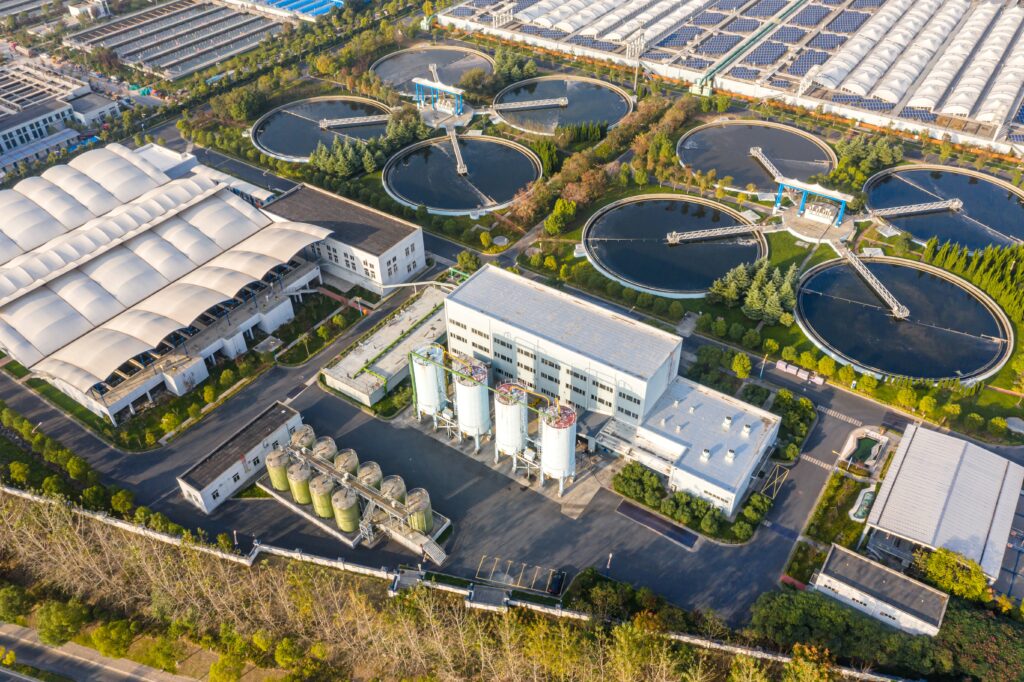
Sydney Water’s $1.2 billion Upper South Creek Advanced Water Recycling Centre (AWRC) is one of the most significant water infrastructure investments currently underway in Australia. Located in Kemps Creek, the facility is being delivered to support the rapid growth of the Western Sydney Aerotropolis, including Western Sydney Airport, Bradfield City Centre and surrounding communities.
When complete, the AWRC will treat up to approximately 70 megalitres of wastewater per day, producing high-quality recycled water to support environmental flows to the Nepean River as well as non-drinking uses such as irrigation and industrial supply. Designed to service up to 400,000 new dwellings through to 2056, the project provides a rainfall-independent source of water that strengthens resilience across one of Australia’s fastest-growing regions.
Beyond its scale, the facility represents a shift toward advanced water recycling and circular resource recovery. Treated wastewater will support improved river health, while biosolids and energy recovery opportunities contribute to long-term sustainability objectives. During construction, the project is expected to generate more than 1,000 jobs, reinforcing its economic impact across Western Sydney.
Stabilising and strengthening program controls
TBH was awarded the Integrated Project Controls (IPC) services and delivered these functions throughout delivery of the project. The engagement was delivered in two stages: an initial establishment phase, followed by an uplift phase.
During the establishment phase, TBH took over the existing IPC functions and developed connections with key stakeholders. In the second phase, TBH supported the uplift of IPC capability to be suitable for a $1b+ project, providing proactive controls of the USC project, including integrated management of time, cost, change, risk, document management, reporting and governance. A senior lead was provided to interface with the broader Sydney Water business.
Planning and scheduling support included development of the Sydney Water Master Schedule covering the AWRC, pipelines and access road works, together with detailed review of contractor programs and assessment of extension of time claims. Productivity analysis was undertaken to identify gaps and establish Earned Value reporting.
Cost management involved development of a Cost Breakdown Structure and cost tracking tool, preparation of a detailed Sydney Water team estimate and consolidation of contractor pricing into the overall project budget. The Work Breakdown Structure and Cost Breakdown Structure were aligned to enable Earned Value measurement, supported by risk-adjusted cash flow forecasting. TBH also provided review and inputs into Early Warnings and Change Events under the NEC4 form of contract.
Risk management was delivered through development and maintenance of the project Risk Register, facilitation of fortnightly risk review sessions and quarterly Quantitative cost and schedule risk analyses. Monthly contingency drawdowns were aligned with Early Warning Notices and Compensation Events under the NEC4 form of contract.
Document control and reporting were supported through management of formal document exchanges and coordination via Comment Tracking Registers, alongside development of integrated PowerBI dashboards covering time, cost, risk, change, KPIs and safety metrics.
In parallel with its project-level role, TBH has also supported Sydney Water at a portfolio level to develop and implement an integrated risk management framework across its Major Projects program, including the Upper South Creek AWRC. This work aligns quantitative and qualitative risk processes with cost, schedule and contingency planning, supporting consistent risk governance and reporting across major capital investments.
Supporting water sustainability across Australia
The Upper South Creek project reflects TBH’s long-standing involvement in Australia’s water sustainability sector.
“TBH has been involved in the water sustainability sector for quite a long time, having worked on almost every desalination project in Australia,” said Robbie Breschkin, Director. “We’ve also been involved in pipeline infrastructure that transfers water between regions to support a more resilient network, and more recently in the upgrades and construction of new treatment plants that enable further development, including major infrastructure such as new airports in New South Wales.
“Exploring alternatives to desalination, including advanced water recycling, allows us to contribute to a more sustainable water supply for the population of Sydney.”
Through its role on the Upper South Creek project, TBH is supporting the delivery of a major wastewater recycling facility that will contribute to long-term water resilience and sustainable growth across Western Sydney. View the project case study here.